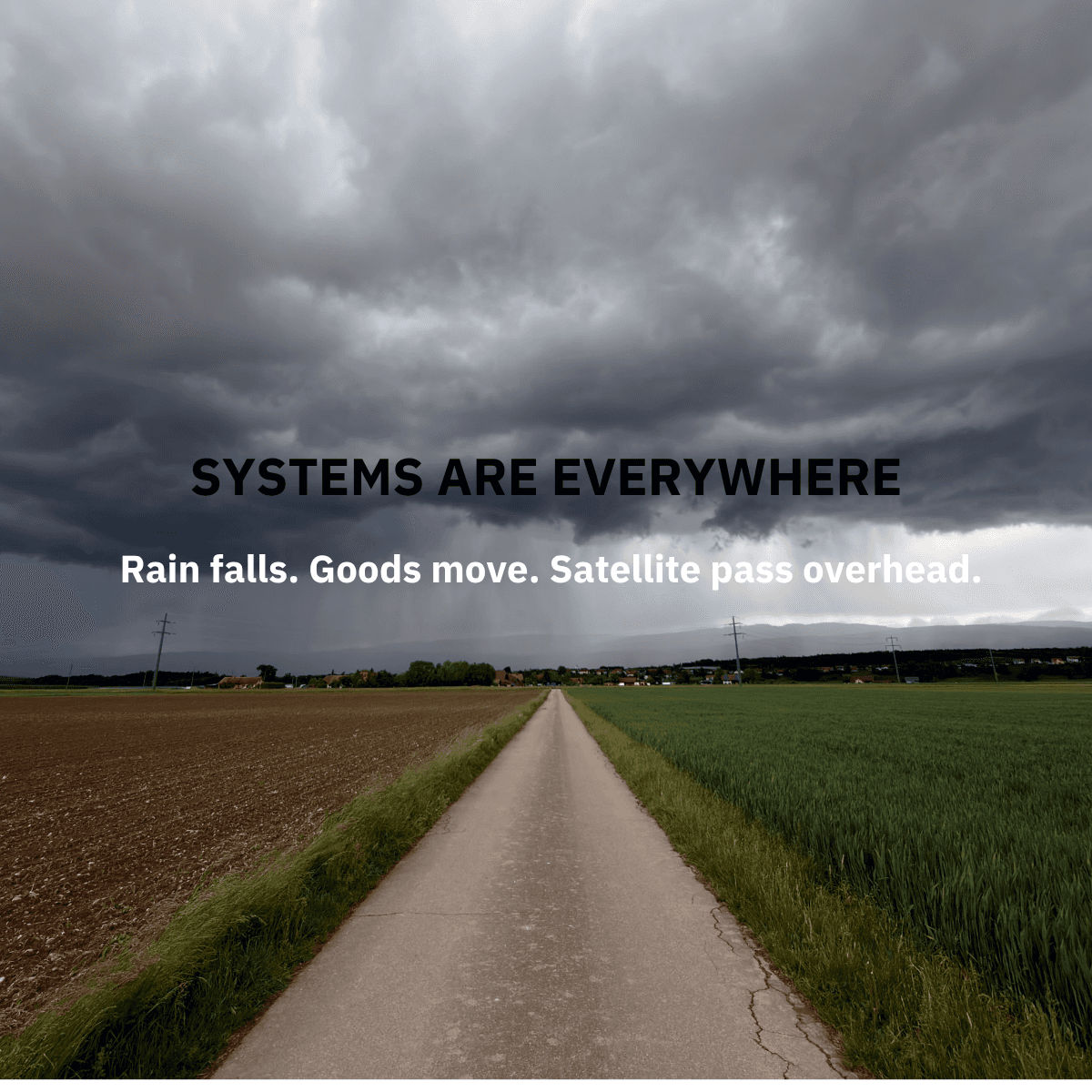
Systems Are Everywhere
We move through systems every day without giving them much thought. We experience traffic, waiting rooms, and empty shelves, but rarely stop to consider the invisible structures behind them.
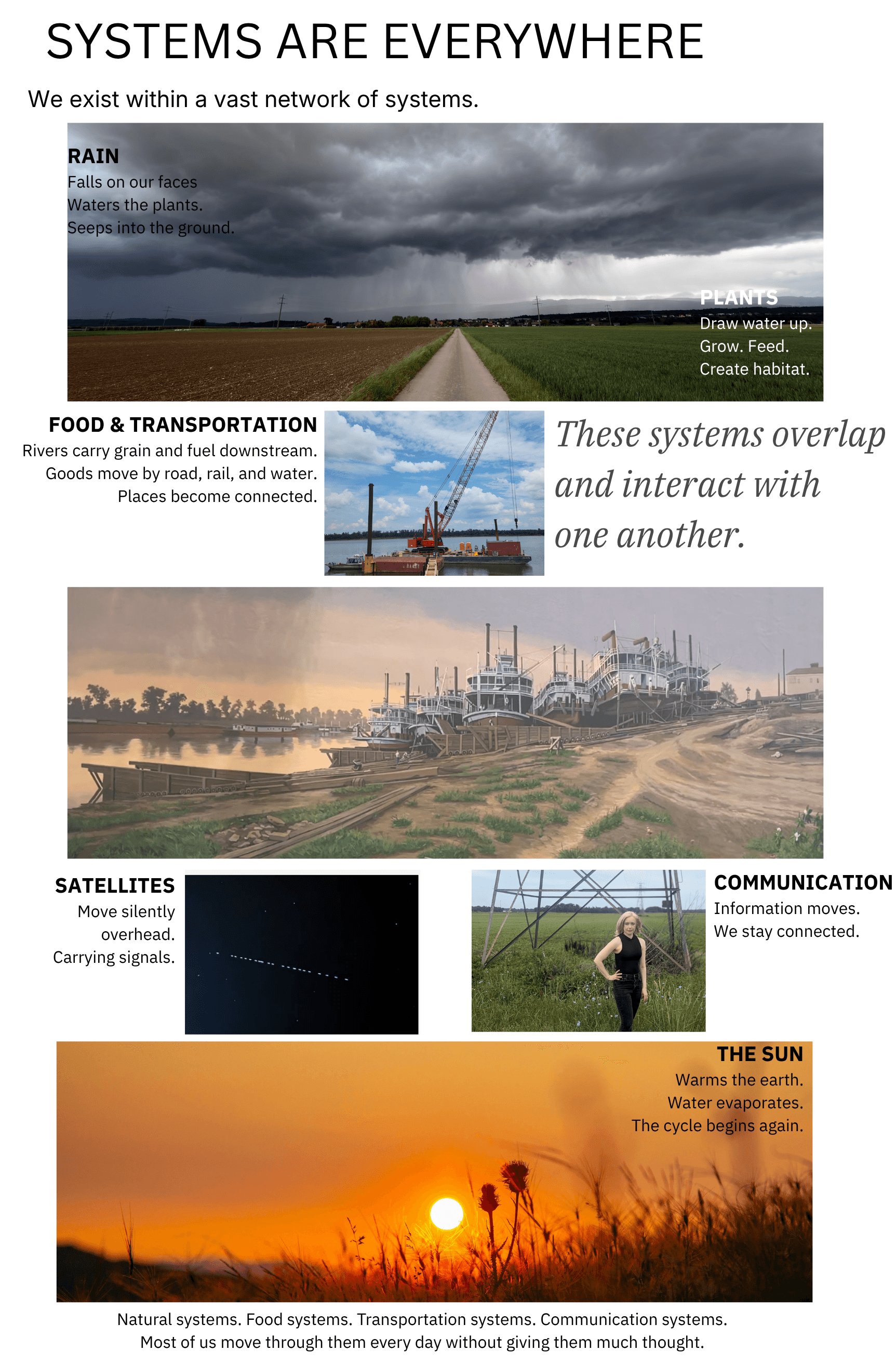
We exist within a vast network of systems.
We stand outside as rain falls on our faces and waters the plants around us. The water seeps into the ground, gathers into streams and rivers, and eventually makes its way to the ocean.
Boats travel those same rivers carrying grain, fuel, and finished products to places we'll never see.
At night, satellites move silently overhead, transmitting signals that connect our phones, guide transportation, and move information around the world.
As morning comes, the sun warms the earth and water begins to evaporate again, becoming part of the cycle that will one day return as rain.
These systems overlap and interact with one another. Natural systems. Transportation systems. Communication systems. Food systems.
Most of us move through them every day without giving them much thought.
Until something goes wrong.
Then we start to notice the invisible structures that shape our lives.
Systems are everywhere.
We Don't Notice Them
Why don’t we learn about systems themselves? In school we learn subjects, facts and events in depth, without connecting them together. We get to adulthood without learning how the systems that shape everyday life actually work.
Later, we learn how organizations and industries function by trying to get things done inside them.
We learn healthcare by navigating healthcare. We learn workplaces by working in them. We learn government by interacting with it.
Most of us learn systems one at a time, through experience.
Because we rarely stop to think about systems, they feel abstract and unknowable to most people.
But systems aren't abstract because they're complicated. They feel abstract because we're usually only exposed to the outcomes that directly affect us, not the underlying structure.
We don't experience the transportation system. We experience traffic.
We don't experience the healthcare system. We experience waiting for appointments, repeating our story, and filling out forms.
We don't experience the food system. We experience empty shelves and rising prices.
Patterns in Plain Sight
But over time, I've started to wonder if systems are not as mysterious, or as different from one another, as they first appear.
Working in healthcare and emergency services, and later observing organizations and communities more broadly, I began noticing recurring patterns. The details changed, but familiar structures kept emerging.
I don't think systems are completely disparate concepts to be understood in isolation. I suspect they can be studied as one body of knowledge, with patterns and structures that repeat across very different domains.
Systems aren't fixed. They're created, maintained, and changed by people.
The more we understand them, the more capable we become of questioning them, influencing them, and improving them for the communities they serve.
This is an invitation to notice them, analyze them, and remember that we're not just shaped by systems. We help shape them, too.
About Me

Maggie Quirk
I write about the systems that shape everyday life. Drawing on experience in healthcare coordination, emergency services, and strategy, I explore how people navigate the organizations and institutions around them.

Trending Post

Stay up-to-date